Meat processing
Temperature and humidity monitoring for meat processing
TempTrack is a wireless LoRaWAN system that continuously measures temperature and humidity in every room of a slaughterhouse, cutting plant or meat processing facility. When a value leaves its set range, the responsible person is alerted immediately, and every reading is stored as a HACCP record.
Challenges
What is specific about meat
01
A narrow temperature window
Fresh meat, offal, poultry and minced meat each have a different upper temperature limit. A few degrees above it over a weekend can mean writing off an entire room.
02
Many rooms, different regimes
Chill rooms, the cutting room, blast freezer, frozen store, smokehouse and curing room all run in different regimes, and each one has to be documented.
03
Humidity in curing and drying
For dry-cured products, air humidity matters as much as temperature: too dry causes case hardening, too humid causes mould.
04
Manual records
Writing temperatures on a sheet twice a day does not show what happened overnight, and it costs quality-control time.
References
Customers in this industry




Regimes
Typical temperature regimes
Indicative values based on hygiene rules for food of animal origin (Regulation (EC) No 853/2004). Your own HACCP plan is authoritative.
| Product / space | Regime |
|---|---|
| Fresh meat (carcasses, halves) | ≤ +7 °C |
| Offal | ≤ +3 °C |
| Poultry meat | ≤ +4 °C |
| Minced meat | ≤ +2 °C |
| Meat preparations | ≤ +4 °C |
| Frozen meat | ≤ −18 °C |
| Cutting room (air) | ≤ +12 °C |
TempTrack
How TempTrack helps
A sensor in every room, no cabling
Battery-powered LoRaWAN sensors are installed without building work and without relying on Wi‑Fi, which as a rule does not work inside panel-and-steel cold rooms.
An alert before the damage is done
You set limits per room. When a compressor stops or a door is left open, the alert goes out by email, SMS, Telegram or over speakers on site.
Temperature and humidity together
The same sensor measures relative humidity, so curing and drying rooms are covered without extra equipment.
HACCP records in one click
A report per room and period is ready for the inspector, the certification body or a customer, with no sheets to copy.
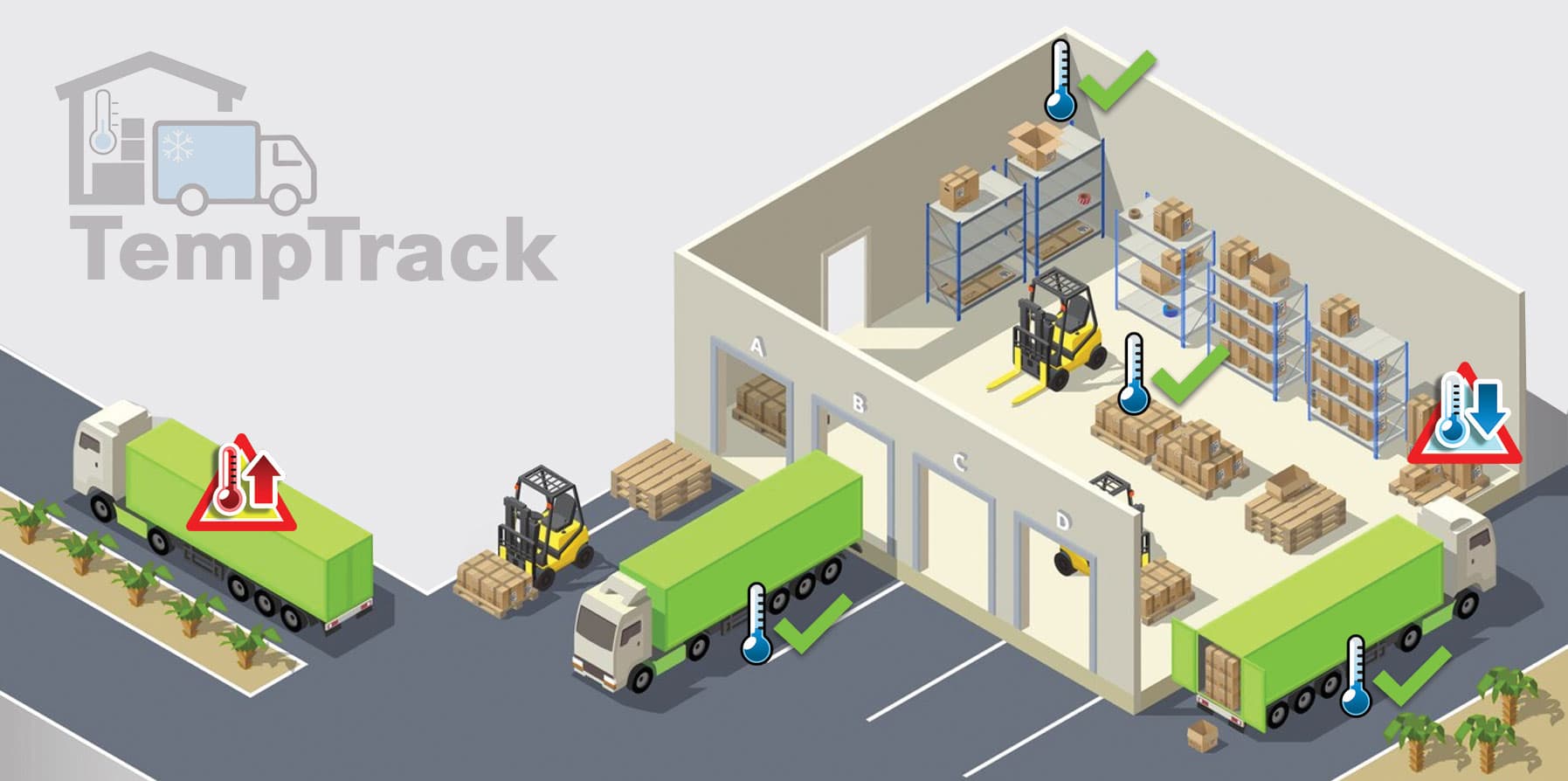
Where sensors are usually placed
- Chill rooms for carcasses and halves
- Cutting room and packing
- Blast freezer and frozen stores
- Curing rooms, drying rooms and smokehouses
- Finished-goods rooms and dispatch
- Delivery vehicles
Frequently asked questions
Do the sensors work in frozen stores?
Yes. Sensors are used in freezer rooms as well, and a LoRaWAN signal passes through insulated panels far better than Wi‑Fi. Coverage to the gateway is checked for each room during installation.
Does TempTrack replace handwritten HACCP temperature sheets?
TempTrack records measurements automatically and stores them in the cloud, so a report from the system can take the place of handwritten sheets. How records are kept is defined in your own HACCP plan.
What happens during a power cut?
Sensors run on batteries and keep measuring. Power failures are exactly when an alert is most valuable, because that is when the room temperature starts to rise.
Other industries
+2…+8 °C
Dairy
From raw milk intake to cheese ripening and dispatch: every step of the cold chain is documented.
−18 / +4 °C
Distribution & logistics
Distribution centres, cold stores and vehicles: proof that goods stayed in regime from receipt to delivery.
+2…+8 °C
Pharmaceuticals
Wholesalers, pharmacies and laboratories: medicine storage in line with Good Distribution Practice guidelines.
HACCP
Food production
Bakeries, confectionery, fruit and vegetable processing, ready meals: temperature and humidity in production and storage.
90–95 % RH
Cold storage & agriculture
Fruit and vegetable cold stores, ULO chambers and farms: the harvest kept safe until it is sold.
0…+4 °C
Restaurants & hospitality
Restaurant chains, central kitchens and catering: every fridge and cold room at every outlet on one screen.
See how TempTrack would work at your site
Tell us how many cold rooms or warehouses you have. We will show you the system in action and suggest a sensor layout.